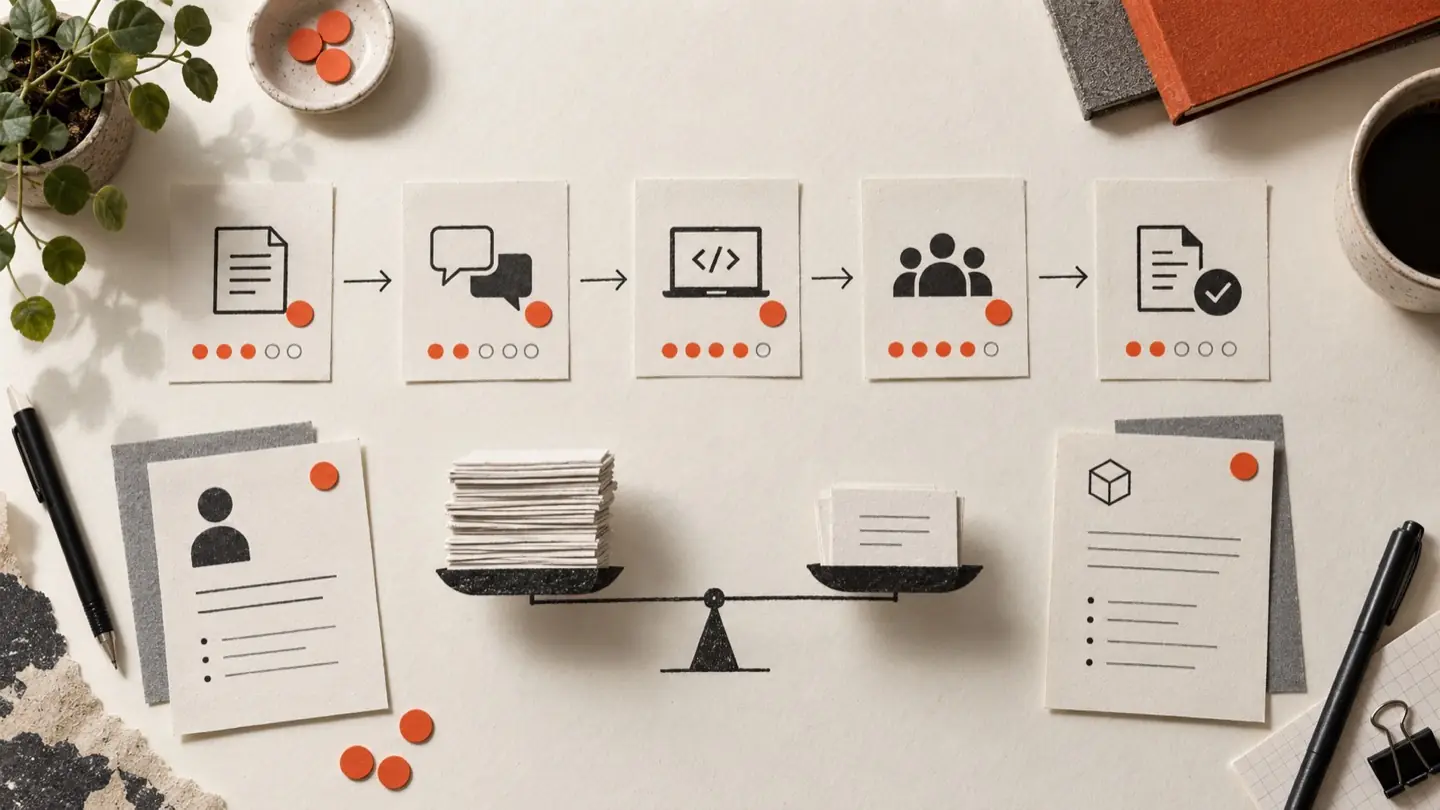
The Fintech That Broke the Internet
I noticed something interesting on design Twitter last week. A fintech company (let's call them "that company") went viral for all the wrong reasons. Their design interview process leaked, and the design community collectively lost its mind.
Here's what they were asking candidates to do: a 5-day take-home design challenge, followed by a 3-hour live design session, followed by multiple rounds of team interviews. For a single design role. All unpaid, of course.
The backlash was swift. Design Twitter roasted them for days. LinkedIn posts calling it "exploitative" got thousands of reactions. Glassdoor reviews started piling up. But here's the thing that struck me: this isn't an isolated incident. This company just said the quiet part out loud.
I've been watching interview processes get longer and more demanding over the past few years. What used to be a portfolio review and a conversation has morphed into multi-week ordeals that ask candidates to essentially work for free. And somehow, we've normalized it.
So let's talk about where the line is, what reasonable looks like, and how to protect yourself from companies that see your time as worthless.
What a Reasonable Interview Looks Like
Before we dive into the red flags, let's establish what good actually looks like. In my experience, the most effective design interviews follow this pattern:
The Gold Standard Process
Recruiter/Hiring Manager Screen
30 minutes. Basic fit, salary expectations, logistics. No design work.
Portfolio Presentation
45-60 minutes. You walk through 1-2 case studies from your existing work. They ask thoughtful questions about your process.
Design Exercise (Pick ONE)
Option A: Live whiteboard session (60-90 minutes). Collaborative, conversational, focused on thinking process.
Option B: Take-home challenge (2-3 hours max). Clear scope, realistic timeline, hypothetical scenario.
Team & Culture Fit
45 minutes. You meet the team, ask questions, get a feel for the day-to-day. Mutual evaluation.
Final Interview
30 minutes with leadership. Vision alignment, growth opportunities, final questions.
Notice what's not in that list? Multiple design challenges. Spec work on their actual products. Vague "creative exercises" with no clear boundaries. Open-ended projects that could expand to fill whatever time you're willing to give.
The key principle is efficient evaluation. Good companies have figured out how to assess design skills without asking candidates to work for free. They use your portfolio (which represents years of real work) as the primary signal, then supplement with one focused exercise to see how you think through problems.
Total time investment? About 4-6 hours, spread over 2-3 weeks. Compare that to the fintech company asking for 40+ hours of unpaid work. The difference isn't just scale — it's respect.
Red Flags to Watch For
I've been collecting these from friends' experiences, design community posts, and my own interviews over the years. Here are the patterns that consistently signal a company that doesn't value your time:
Multiple Design Challenges
Asking for both a take-home challenge AND a live design session. Or multiple take-home exercises for different "skills." One focused challenge is sufficient to evaluate design thinking. Multiple challenges suggest they either don't know how to hire designers, or they're trying to get free consulting.
Real example: "We'd like you to complete a mobile app wireframe exercise (3-4 days), plus a visual design challenge (2-3 days), plus a live whiteboard session (3 hours)."
Vague Time Estimates
"This should take a few hours" or "spend whatever time you think is appropriate." These are traps. Without clear boundaries, perfectionists will spend 20+ hours while others submit after 2. It's impossible to fairly compare results, and it incentivizes overwork.
Red flag phrase: "We just want to see how you think — there's no time limit."
Spec Work Disguised as Challenges
Asking you to redesign their actual product, solve their specific business problems, or improve their current user flows. This crosses the line from "interview challenge" to "free consulting." Legitimate exercises use hypothetical scenarios or generic problems.
Red flag: "We'd love your thoughts on how to improve our checkout conversion rate. Here's our current analytics data..."
Excessive Rounds
More than 5-6 interview rounds for most design roles. Each additional round has diminishing returns and suggests the company can't make decisions efficiently. If they can't streamline their hiring process, imagine working there.
Real example: Phone screen → Portfolio review → Take-home challenge → Challenge presentation → Team interviews → Stakeholder interviews → "Final" interview → Second final interview.
No Compensation for Extensive Work
For challenges requiring 5+ hours of work, reasonable companies offer some compensation — whether monetary ($100-500), expedited process, or detailed feedback. If they won't pay you to interview, they probably won't pay you well to work there either.
Good sign: "This challenge typically takes 3-4 hours. We provide $200 compensation to all candidates who complete it, regardless of outcome."
Unrealistic Deadlines
"We need this back by tomorrow" or "Can you turn this around by Friday?" Reasonable companies understand that good candidates are likely employed and need time to do thoughtful work. Rush timelines often signal internal disorganization.
Reasonable timeline: 1 week for a 2-3 hour exercise, with option to extend if needed.
Red Flag Scorecard
Use this scorecard to evaluate any interview process. The higher the score, the more you should question whether this company respects your time and expertise.
Interview Process Red Flag Scorecard
Scoring Guide:
0-2 flags: Reasonable process, likely respects your time
3-5 flags: Proceed with caution, set clear boundaries
6+ flags: Consider walking away, this company doesn't value candidates
How to Protect Yourself
I notice a lot of designers feel powerless in interviews — like they have to accept whatever process the company throws at them. But you have more agency than you think. Here's how to take back control:
Ask About the Process Upfront
In your first conversation (usually with the recruiter), ask: "Can you walk me through the complete interview process? How many rounds, what's expected at each stage, and what's the typical timeline?"
Script you can use:
"Before we move forward, I'd love to understand the full interview process. Could you outline all the rounds, any design exercises, and the expected time commitment? I want to make sure I can give each stage the attention it deserves."
Set Time Boundaries
When they describe the take-home challenge, be direct about time limits: "That sounds interesting. I typically allocate 3 hours for design exercises — would that work for this challenge?" Most reasonable companies will say yes.
Boundary-setting phrases:
- • "I can dedicate 3 hours to this — can you confirm that's sufficient?"
- • "I'll time-box this to 2 hours and document my process clearly."
- • "Given my current workload, I'll need to limit this to [X] hours."
Counter-Propose Alternatives
Instead of a lengthy take-home, offer to present relevant work from your portfolio: "I have a case study that demonstrates exactly those skills — could I walk through that instead of doing a separate exercise?"
Alternative proposals:
- • Offering to present existing case studies that match their needs
- • Proposing a shorter, live collaborative exercise instead of take-home
- • Suggesting they pay you for extensive exercises (shows you value your time)
Be Willing to Walk Away
This is the hardest one, but it's crucial. If a company won't budge on unreasonable requests, that tells you everything about their culture. You're interviewing them too — use that leverage.
Professional withdrawal script:
"After learning more about the process, I don't think I can commit the time required while maintaining quality in my current work. Thank you for your consideration."
Remember: how they treat you during the interview is how they'll treat you as an employee. A company that burns you out during the hiring process will burn you out on the job.
What Companies Should Do Instead
I've been on the hiring side too, and I get it — evaluating design skills is challenging. You want to see how someone thinks, how they handle feedback, how they collaborate. But there are better ways than grinding candidates through endless exercises.
The Better Approach
Respect Portfolio Work
A strong portfolio represents years of real work solving actual problems. Spend more time digging into existing case studies rather than creating artificial challenges.
Keep Exercises Short (2-3 Hours Max)
You can evaluate design thinking in a focused 2-hour exercise. Anything longer tests endurance, not skill. Set clear time boundaries and stick to them.
Compensate Substantial Work
If you're asking for 3+ hours of someone's time, offer compensation. $200-500 shows you respect their expertise and filters for serious candidates.
Use Hypothetical Scenarios
Design challenges for a fake airline booking flow, not your actual product. Avoid the appearance of free consulting by using generic problems every candidate solves.
Make the Process Collaborative
The best signal comes from working together, not watching someone work alone. Live exercises with discussion reveal thinking patterns better than polished deliverables.
Example: Better Live Exercise
Instead of: "Redesign our mobile app in 5 days and present your solution."
Try: "Let's spend 60 minutes together designing a simple task flow for a hypothetical travel app. I'll share the brief, you can ask questions, and we'll work through it collaboratively."
Result: You see how they think, how they ask questions, how they handle constraints — all the things you actually need to know.
How Your Portfolio Can Reduce Friction
Here's something I've noticed: designers with really strong portfolios get asked to do fewer additional exercises. When your case studies clearly demonstrate the skills they're looking to evaluate, smart companies skip the busywork.
Show Your Process, Not Just Outcomes
Include sketches, research insights, iteration cycles, and decision rationales. When companies can see how you think, they don't need to test it separately.
Good case studies answer: How did you approach this problem? What alternatives did you consider? How did you validate your decisions?
Include Collaboration Examples
Document how you worked with developers, product managers, and stakeholders. Show meeting notes, feedback incorporation, and constraint navigation.
This addresses the "can they work with our team?" question that drives many interview rounds.
Demonstrate Range
Include different types of projects — research-heavy, constraint-driven, fast turnaround, complex interaction design. Breadth reduces the need for additional "skill tests."
Aim for 2-3 substantial case studies that collectively show the full spectrum of design thinking.
The goal is to make your portfolio so comprehensive that additional exercises feel redundant. When you can point to existing work that demonstrates exactly what they're trying to test, many companies will skip the extra homework.
Pro tip: During portfolio reviews, explicitly connect your case studies to the role requirements. "This project shows how I approach complex navigation problems, which seems relevant to the challenges you mentioned."
The Bottom Line
Your time has value. Don't give it away for free.
The design industry has somehow normalized 40-hour unpaid "challenges" as standard practice. It's not. It's exploitation dressed up as evaluation.
Good companies have figured out how to hire great designers without burning them out in the process. They respect your time, compensate extensive work, and make decisions efficiently.
If a company won't budge on unreasonable interview demands, imagine working there every day. You're not just looking for any job — you're looking for the right one.
Reasonable vs Excessive
Here's a side-by-side comparison to help you recognize the difference:
Reasonable Process
Total time commitment
4-6 hours over 2-3 weeks
Design exercise
Either take-home (2-3h) OR live session (90min) — not both
Exercise scope
Clear time boundaries, hypothetical scenarios
Interview rounds
4-5 total rounds maximum
Portfolio focus
Deep dive into existing case studies
Compensation
Offered for 3+ hour exercises
Excessive Process
Total time commitment
20-40+ hours over multiple weeks
Design exercise
5-day take-home PLUS live session PLUS additional challenges
Exercise scope
"Spend whatever time you think is appropriate" — no boundaries
Interview rounds
7+ rounds with multiple stakeholders
Portfolio focus
Minimal time on existing work
Compensation
None, even for extensive work
Everything You Need to Know
Quick answers to help you get started
Stay in the Loop Design Updates
Get practical design tips and new updates. No spam, unsubscribe anytime.